The Hackathon Advantage in AI Adoption
How three game-changing events proved that hands-on experimentation trumps theoretical learning
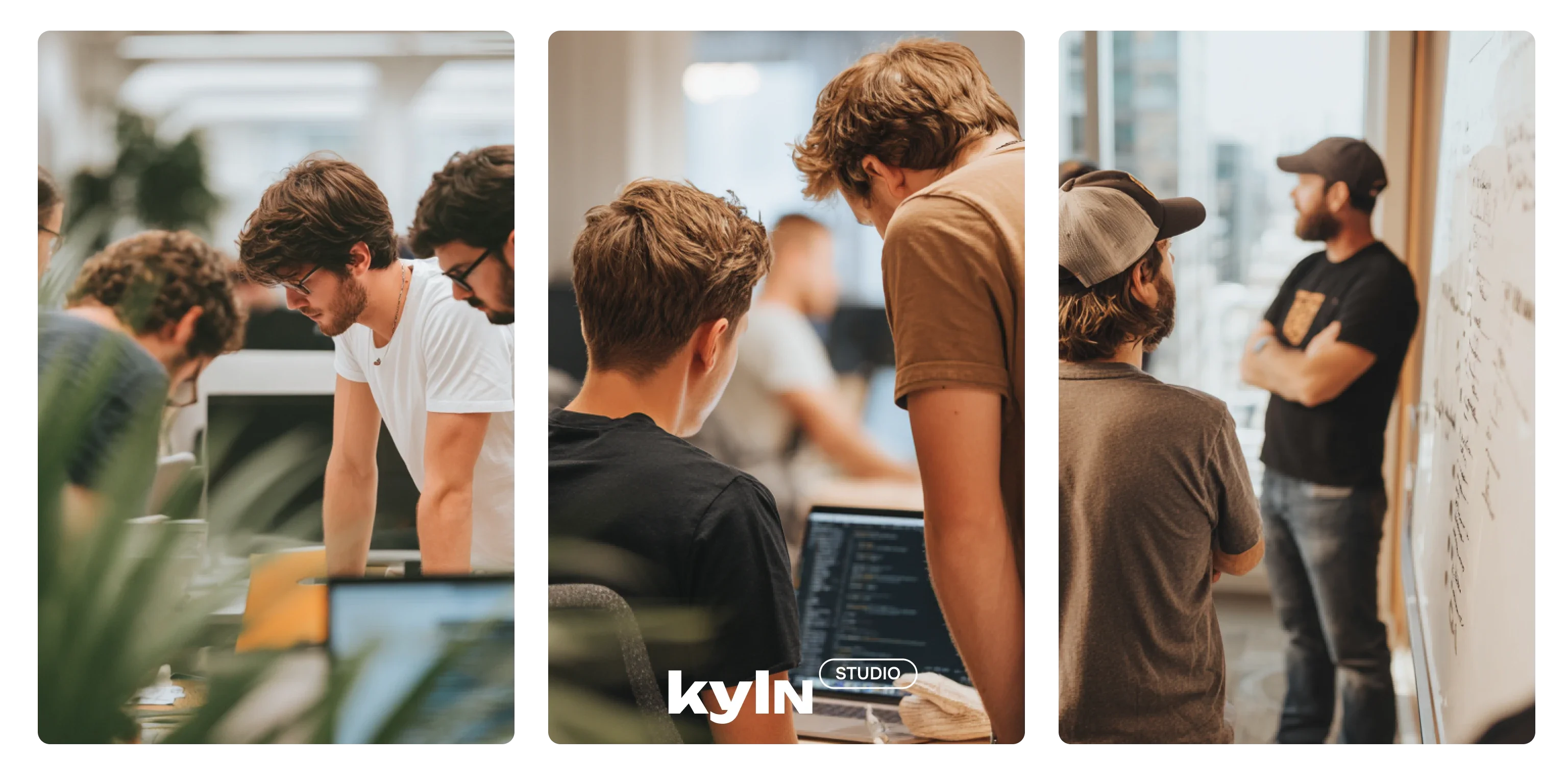
The conference rooms are buzzing. Coffee cups multiply. Whiteboards fill with diagrams. In just hours, teams that have never touched AI before are building chatbots, analyzing sustainability data, and creating tools that would typically take weeks to develop.
This isn't just another corporate training session, this is how we do AI Hackathon sessions!
Round One: What are the top tools in AI?
Most companies are still stuck in analysis paralysis, wondering how to make AI work for them. That's where our hackathon journey began. AI makes learning AI much easier, easier than you think. First we needed to find the best possible AI tools available. Tools that were actually useful for development, not just glorified chatbots.
"We realized that talking about AI and actually building with it are two completely different things. The hackathon format forces you to stop theorizing and start creating."
Though Github Co-pilot was an amazing first step, it quickly became obvious that a big player like Github will be slow to innovate. We tried out Cursor & Windsurf and were amazed by the quality and understanding. But that might have been trumped by a small player called Cline. Cline lets developers tinker and little did we know that this VSCode plugin would be the foundations for the frameworks we created.
We now know the top AI tools we use everyday. Along with knowing which models to pick.
Round Two: RAG - Adding company context to AI
Our second hackathon was bigger: build a RAG (Retrieval-Augmented Generation) chatbot that could unlock a company's scattered knowledge base.
Think about your own organization for a second. How much time do your teams waste hunting through documentation, Slack histories, and buried email threads? How many times do new hires ask the same questions that veterans have answered hundreds of times?
Almost every client we spoke with wanted to append internal data into the LLM. "We want the AI to understand our company and services and reply accordingly"
In this hackathon we learned:
How Vector databases worked and dove into Pinecone and Qdrant.
How to chunk data and create embeddings with a sprinkle of semantic searching.
That creating a smarter chatbot is simple, but tweaking the data is the hardest part.
The result? We have an internal Slack bot for our devs that can answer questions from our internal Wiki. The results are impressive, with a 91% success rate, meaning the AI responded with the correct content and link to our Wiki.
Round Three: From zero to AI hero in 8 hours
Our most ambitious hackathon partnered with a sustainability tech company working on Life Cycle Assessment (LCA) software. The challenge? Use AI to accelerate environmental impact analysis. To make things harder on us, the client didn't want to explore just one AI technique, but 4!
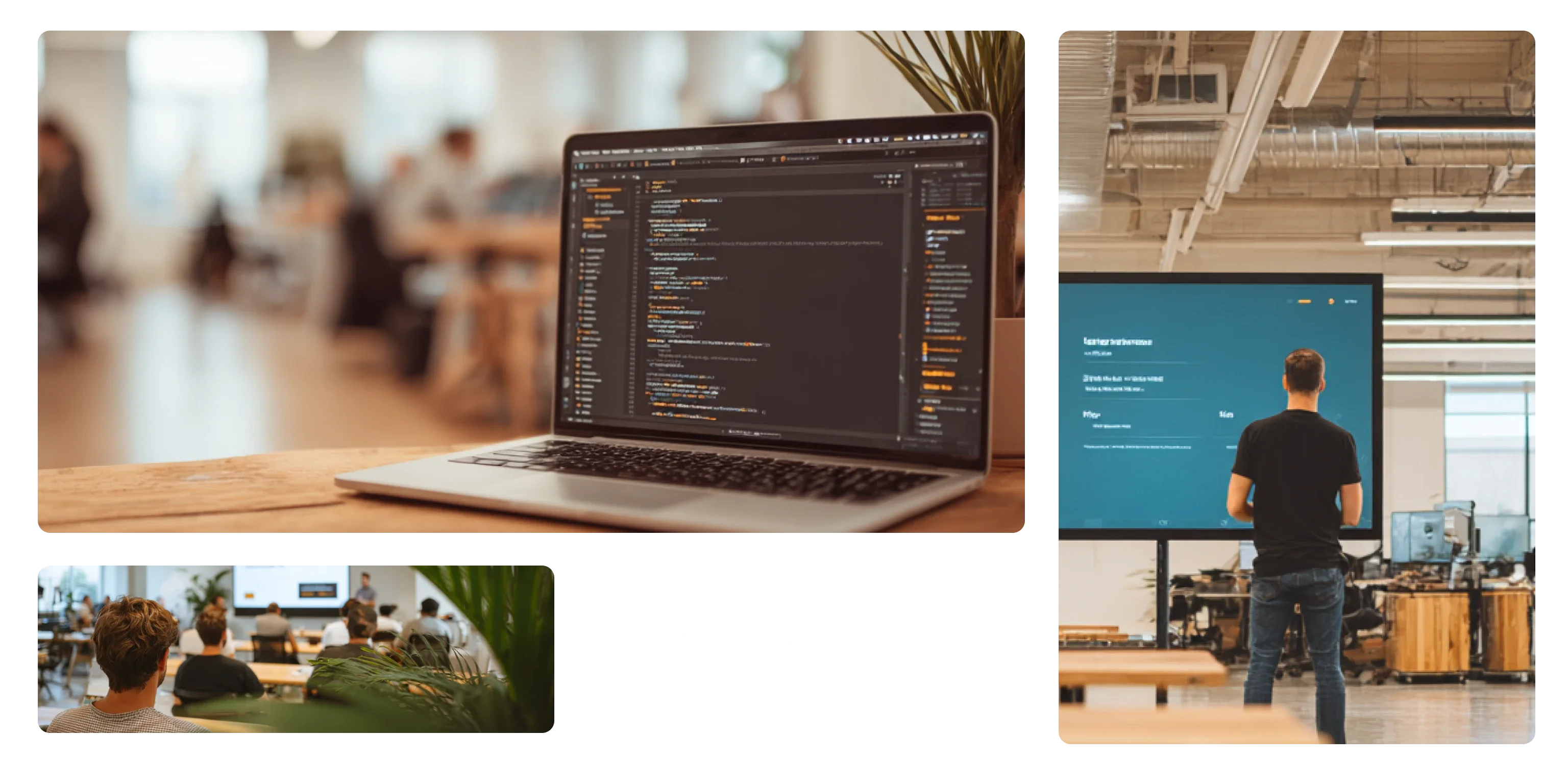
We crafted a full spectrum AI Hackathon, starting with a 2 hour AI tools keynote, where developers got to see various AI IDE's, tools and techniques. Once the theory was done, the team broke into 4 groups, each with a specific task and AI toolkit.
Team 1 - Had to use Genetic Algorithms to figure out which production recipe was most optimal in terms of cost, waste and CO2 emissions. This was a hard topic to explain, but vibe coding helped lay the ground work.
Team 2 - Tackled LCA data transformations. Using AI to reformat files of various types into a standardised format
Team 3 - Was in charge of data sanitation, sorting, filtering and filling in blanks in the source data. AI was able to analyse and create a helpful app for approving AI generated fillers (which was correct at least 90% of the time).
Team 4 - Created an AI vector database with semantic searching capabilities
Even though the teams haven't had much contact with AI tools, nor knew Python, they were able to get the tasks done with AI-assistance and the right guidance from our coaches.
The result, after an intense day of AI hacking? Definitely not any polish product working 100%, but the foundations were laid. We noticed the software engineers exchanging findings between teams, sparking new ideas and directions. The devs started thinking far beyond the scope of our Hackathon and were asking for more advanced techniques. If that doesn't scream a job well done, then I don't know what will.
Want to host an AI Hackathon for your dev team?
At Kyln we offer AI consultations, workshops and hackathons, by devs for devs. As seen above a one day investment can spark new ideas and motivation to create, automate and improve. Reach out to us for more!